-
Delson Uchôa
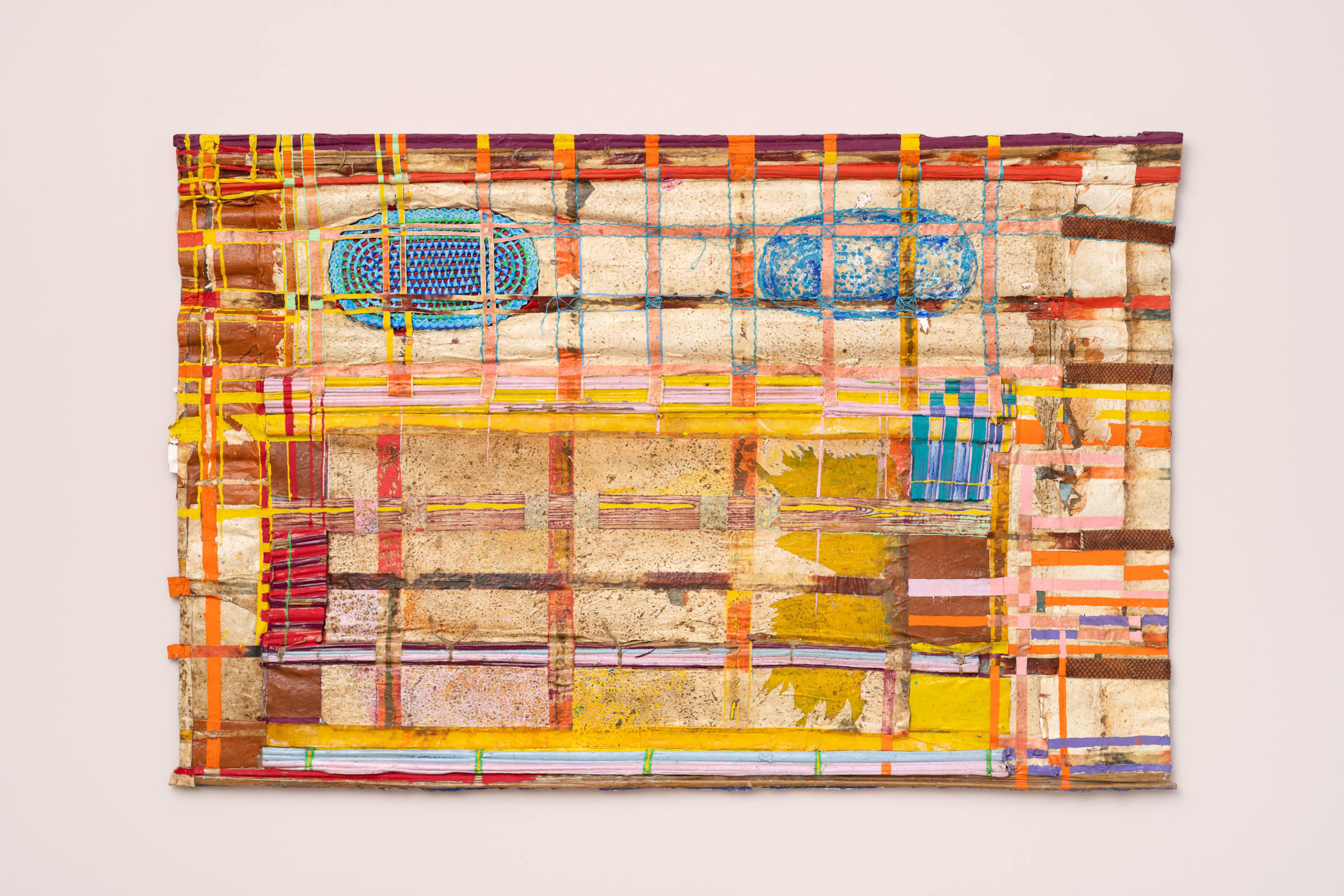
“Platibanda escotilha”, 2023resina em pigmento de tinta acrílica desidratada sobre piso de barro batido
dehydrated acrylic paint resin on beaten clay floor and plant fiber123 x 181 cm
48.42 x 71.25 inDelson Uchôa is a researcher of color, drawing on the distinctive luminosity of his region – the coast of Alagoas – as a point of reference. The artisanal process through...Delson Uchôa is a researcher of color, drawing on the distinctive luminosity of his region – the coast of Alagoas – as a point of reference. The artisanal process through which he creates his paintings foregrounds materiality and becomes part of the work itself. By combining resin and pigments, the artist produces “paint skins” that accumulate and dry in layers before being transplanted onto the final surface.
Platibanda escotilha [Platibanda Porthole] (2023) belongs to a series of paintings that portray the facades of the wattle-and-daub riverside houses along the lower stretch of the São Francisco River. The work incorporates the “paint-skin” cultivated on the beaten-clay tiles of the artist’s studio floor, carrying the impression of the place in which it was produced. This identity is further marked by the presence of fragments of Brazilian papyrus reed combined with ouricuri palm fiber, used to construct the oval grids of the porthole-like openings. For the artist, it constitutes “a robust body that evokes the essence of the Brazilian Northeast and of Latin America.”Delson Uchôa é um pesquisador da cor, trazendo a luminosidade própria da sua região, litoral de Alagoas, como ponto de partida. O processo artesanal com o qual realiza suas pinturas evidencia a materialidade e é incorporado pela obra. A partir da combinação entre resina e pigmentos, o artista produz "peles de tinta" com o acúmulo e secagem desses materiais, que são então transplantadas na obra.
A obra "Platibanda escotilha" (2023) faz parte de uma série de pinturas que representam as fachadas das casas ribeirinhas de pau a pique do baixo São Francisco e traz o “couro-de-tinta”cultivado nas lajotas de barro batido do piso do ateliê do artista e, portanto, a impressão do local onde foi produzida. Essa identidade também é marcada pela presença dos pedaços de caniço papiro do Brasil, associados à palha de ouricuri, usada na construção da grade oval da escotilha. Para o artista, trata-se de “um corpo robusto que remete à essência do Nordeste brasileiro e da América Latina”.